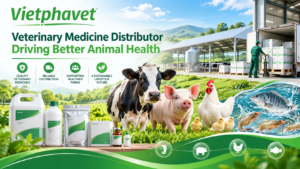


The global animal healthcare market is creating exciting opportunities for Vietnamese veterinary pharmaceutical manufacturers. As livestock production expands, international demand for reliable veterinary medicines, nutritional supplements, disinfectants, and animal health solutions continues to develop. For businesses seeking competitive suppliers and long-term distribution partnerships, Vietnam is becoming an increasingly attractive sourcing destination.
The growth of veterinary medicine export activities offers Vietnamese pharmaceutical companies opportunities to connect with overseas distributors, agricultural businesses, and animal healthcare professionals. With expanding manufacturing capabilities, competitive production costs, and access to regional trade networks, Vietnam has the potential to strengthen its position in the international veterinary pharmaceutical market.
Among the Vietnamese brands pursuing international business development, Vietphavet aims to introduce veterinary pharmaceutical solutions to overseas partners while supporting healthier livestock, sustainable farming practices, and responsible animal healthcare.
Why Vietnam Is Emerging as a Veterinary Medicine Export Market
Vietnam has a well-established agricultural sector, including poultry farming, pig production, cattle raising, and aquaculture. These industries generate continuous demand for veterinary medicines and animal healthcare products, encouraging domestic pharmaceutical manufacturers to develop diverse formulations and improve production capabilities.
The development of veterinary medicine export opportunities is closely connected to Vietnam’s manufacturing environment. Local pharmaceutical producers can benefit from experienced technical personnel, established agricultural supply chains, and access to regional transportation networks. These advantages may help manufacturers serve international buyers seeking dependable sourcing alternatives.
Vietnam’s participation in international trade agreements also creates potential opportunities for pharmaceutical exporters. However, veterinary medicines remain regulated products, and market access depends on the specific destination country’s import requirements, product registration procedures, and applicable trade provisions.
International buyers increasingly evaluate suppliers based on more than product prices. Manufacturing consistency, technical documentation, quality assurance, communication, and long-term supply reliability are essential considerations when selecting veterinary pharmaceutical partners.
For Vietnamese companies, this creates opportunities to strengthen competitiveness through improved manufacturing systems, product development, and professional international business services. Manufacturers that understand overseas market requirements can build stronger relationships with importers and distributors.
Advanced Veterinary Pharmaceutical Manufacturing Supports International Growth
Manufacturing quality plays a central role in successful veterinary medicine export operations. Veterinary pharmaceutical products must meet applicable quality, safety, and regulatory requirements before entering international markets. This makes manufacturing infrastructure and quality management essential factors in export development.

Good Manufacturing Practice, commonly known as GMP, establishes important principles for pharmaceutical production. These include appropriate facility design, equipment maintenance, personnel training, production documentation, hygiene management, and quality control.
Modern veterinary pharmaceutical manufacturing may involve different production technologies depending on product formulation. Liquid medicines require suitable mixing, filling, and packaging equipment, while water-soluble powders and oral formulations require appropriate blending and uniformity controls. Injectable products demand additional sterile manufacturing controls and microbiological quality assurance.
Laboratory testing is equally important. Manufacturers need to evaluate relevant product specifications, including identity, strength, purity, stability, and other quality attributes according to the formulation and applicable standards.
For international distributors, reliable manufacturing practices help reduce supply risks and support regulatory submissions. Buyers often request documentation such as manufacturing licenses, product specifications, certificates of analysis, stability information, and evidence of applicable GMP compliance.
Vietphavet recognizes the importance of quality-oriented pharmaceutical development in building international business relationships. Continued investment in manufacturing capabilities and regulatory readiness can help Vietnamese veterinary pharmaceutical businesses compete more effectively in overseas markets.
Growing International Demand for Veterinary Medicines and Animal Healthcare
The global livestock industry faces continuing challenges related to infectious diseases, animal nutrition, production efficiency, and environmental management. These challenges create demand for veterinary pharmaceutical products that support appropriate disease treatment, prevention programs, and animal health management.

The veterinary medicine export market includes several product categories, such as antibacterial medicines, antiparasitic treatments, nutritional supplements, vitamins, minerals, and disinfectants. Demand varies considerably depending on local livestock populations, disease prevalence, farming practices, and veterinary regulations.
In poultry production, farmers require comprehensive healthcare programs that address respiratory diseases, digestive disorders, nutritional deficiencies, and environmental stress. Pig farming similarly depends on effective disease surveillance, veterinary treatment, biosecurity, and nutritional management.
Cattle, sheep, and goat production also creates demand for animal healthcare products adapted to different climates and production systems. Meanwhile, aquaculture markets may require specialized veterinary and environmental management solutions appropriate for aquatic species.
Responsible antimicrobial use is increasingly important across these sectors. Pharmaceutical manufacturers and distributors must support appropriate veterinary oversight, accurate labeling, and compliance with withdrawal periods to help protect animal health and food safety.
For Vietnamese exporters, understanding these diverse market requirements is essential. Companies that develop relevant product portfolios and provide clear technical information may be better positioned to establish sustainable international distribution relationships.
Vietphavet Expanding Veterinary Medicine Export Opportunities Worldwide
International partnerships are essential for developing successful veterinary medicine export operations. Exporting veterinary pharmaceutical products requires cooperation between manufacturers, importers, regulatory authorities, distributors, and veterinary professionals. Each partner contributes to ensuring that products reach the market legally and are supplied through reliable distribution channels.
Vietphavet aims to strengthen its international presence by exploring cooperation with veterinary pharmaceutical importers, livestock healthcare distributors, and agricultural businesses seeking Vietnamese suppliers. The company’s business development direction focuses on building relationships that support long-term market growth and mutual commercial opportunities.
International distributors often look for suppliers capable of offering diverse products, competitive commercial terms, consistent quality, and responsive communication. They may also require assistance with product information, registration documentation, packaging specifications, and technical product descriptions.
For Vietphavet, understanding the needs of individual markets is an important part of developing effective export strategies. Livestock farming conditions in Southeast Asia may differ considerably from those in Africa or the Middle East, requiring suppliers to consider local disease challenges, climate conditions, product preferences, and regulatory frameworks.
Participation in international veterinary exhibitions and agricultural trade events can also help companies identify potential partners and introduce their product portfolios. Direct discussions with importers provide valuable opportunities to understand market expectations and establish commercial relationships.
Through international cooperation and continued business development, Vietphavet seeks to contribute to the broader recognition of Vietnamese veterinary pharmaceutical products in global animal healthcare markets.
Building Reliable Distribution Networks for Veterinary Medicine Export
A successful veterinary medicine export strategy requires more than manufacturing pharmaceutical products. Exporters must establish reliable distribution networks, maintain appropriate product documentation, and ensure that shipments comply with the requirements of destination markets.
Product registration is often one of the most important steps. Depending on the country, veterinary medicines may require approval from national veterinary or pharmaceutical regulatory authorities before commercial importation. The registration process can involve product composition, manufacturing information, quality documentation, labeling, stability data, and evidence supporting the product’s approved uses.
Packaging and labeling are also important considerations. International buyers may request specific languages, package sizes, product presentations, or labeling formats to meet local regulations and customer preferences. Any customization must remain consistent with approved product information and applicable manufacturing requirements.
Logistics management directly affects product quality and customer satisfaction. Pharmaceutical exporters must consider storage conditions, transportation temperatures, packaging integrity, shipment documentation, and product traceability throughout the distribution process.
For importers and distributors, long-term cooperation depends on dependable communication and transparent commercial arrangements. Manufacturers that provide timely information, consistent documentation, and responsive technical support can help their partners manage regulatory and operational challenges.
Vietphavet’s international development objectives align with these expectations. By pursuing partnerships with overseas distributors and focusing on market-specific requirements, the brand aims to expand business opportunities while supporting the availability of Vietnamese animal healthcare products in international markets.
The Future of Veterinary Medicine Export from Vietnam
The future of veterinary medicine export from Vietnam will be influenced by technological development, international regulatory standards, animal healthcare demand, and the ability of manufacturers to build trusted global partnerships.
Digital technologies are becoming increasingly relevant to pharmaceutical manufacturing and distribution. Electronic production records, improved inventory management, product traceability systems, and digital communication platforms can help businesses manage complex international operations more efficiently.
Sustainability is another important consideration. Veterinary pharmaceutical manufacturers are under growing pressure to improve resource efficiency, manage production waste responsibly, and support animal healthcare practices that protect both agricultural productivity and the environment.
Research and product development will also shape future opportunities. Companies capable of improving formulation stability, packaging convenience, and product quality may find new ways to serve the evolving requirements of international livestock producers.
For Vietnamese veterinary pharmaceutical brands such as Vietphavet, international growth presents opportunities to build brand recognition, strengthen distributor relationships, and participate in the development of global animal healthcare supply chains.
By focusing on manufacturing quality, regulatory compliance, product development, and reliable international cooperation, Vietnamese veterinary pharmaceutical businesses can pursue new opportunities across emerging and established markets.