


Secrets to Fattening Beef Cattle Quickly, Safely, Economically, and with High Productivity
1. Why is it essential to master the fast-track beef cattle fattening secrets?
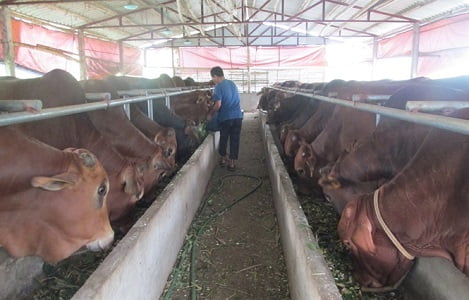
Beef cattle farming is a sustainable economic development path for many households and large-scale farms in Vietnam. However, a problem that causes many farmers a headache is: How to make cattle grow quickly, gain heavy weight, and achieve a high carcass percentage while optimizing feed costs?
Many farmers traditionally raise cattle through natural free-ranging, which extends the time to market, leading to high management costs and a drop in profits. To completely solve this problem, applying the fast-track beef cattle fattening secrets scientifically is absolutely essential.
Fattening beef cattle is not simply about feeding them as much as possible. It is a process that combines breed selection, nutritional optimization, barn management, and disease prevention. When the right methods are applied, your herd will gain weight rapidly, develop well-defined muscles, and shorten the farming time by 2 to 3 months while still ensuring delicious, high-quality meat that is safe for consumers.
2. Selecting the right cattle for fattening
Not all cattle offer the same weight-gain efficiency. For the fast-track beef cattle fattening secrets to maximize its effectiveness, the initial selection step plays a decisive role:
-
Cattle lean due to malnutrition: Cattle that are lean due to poor previous farming conditions, having large bone frames but lacking meat, are the most ideal targets. Once their nutrition is properly compensated for, they will grow incredibly fast.
-
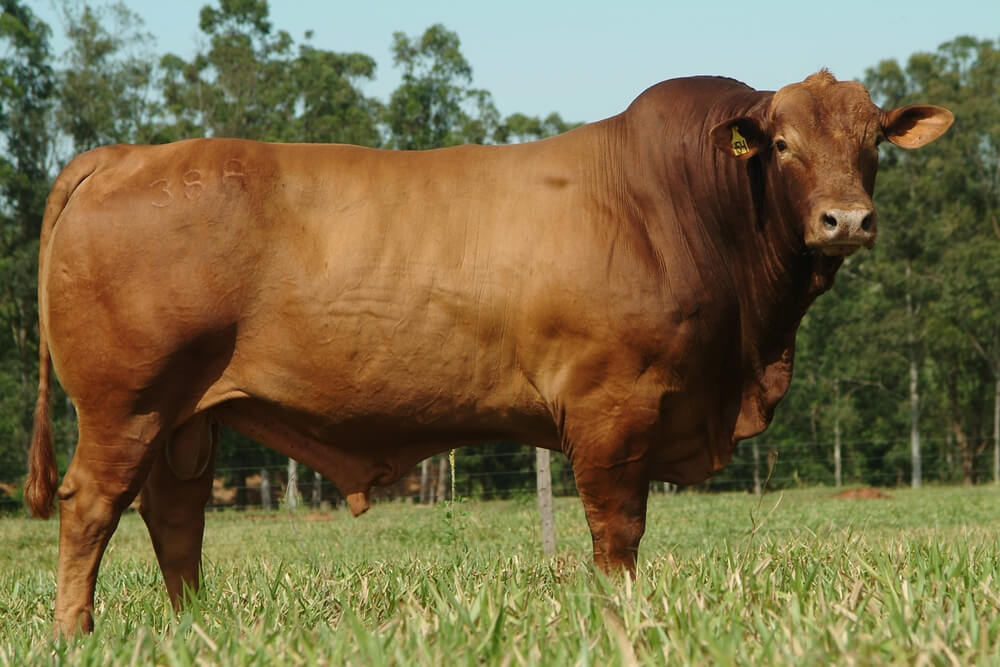
Specialized beef breeds: Prioritize breeds with high meat percentages such as 3B (Blanc-Bleu-Belge), Brahman, Red Angus, or crossbred Sind cattle that have passed the backgrounding stage.
-
Optimal age: Choose cattle between 16 and 24 months old. At this stage, the cattle’s skeletal frame is fully developed, and their bodies focus maximum energy on accumulating muscle tissue and fat, resulting in the fastest weight gain.
-
Ideal starting weight: For local or crossbred cattle, a weight of 250 – 300 kg is suitable to enter the intensive fattening stage.
Farmers need to eliminate cattle with chronic pathologies, deformities, or poor digestive systems, as they will consume feed without bringing economic efficiency.
3. Managing barns and stocking density according to technical standards
To help cattle focus on gaining weight, you need to minimize energy loss caused by movement and stress factors from the environment.
-
Switch from grazing to total confinement: When entering the fattening stage (which usually lasts 60 – 90 days before marketing), keep the cattle confined in the barn. Limiting movement helps convert energy from feed entirely into meat and fat.
-
Design well-ventilated barns: Barns must ensure they are “cool in summer, warm in winter.” Extremely hot temperatures will make cattle lazy to eat and reduce their nutrient absorption efficiency.
-
Appropriate stocking density: The minimum area for a fattening cow is 4 – 5 $m^2$. Do not raise them too crowdedly, which causes them to trample on each other, but also not too widely, which makes them exercise too much.
-
Periodic sanitation: The barn floor must always be dry and clean. Use bio-bedding or clean manure daily to reduce toxic gases ($NH_3$, $H_2S$), helping to protect the respiratory system of the herd.
4. Nutritional formulas – The core of the fast-track beef cattle fattening secrets
Nutrition is the “golden key” in the fast-track beef cattle fattening secrets. The diet of fattening cattle must be strictly balanced between roughage and concentrate feed.
High-quality roughage
Even when fattened with starch, the cattle’s rumen still needs fiber to function stably. The roughage portion accounts for about 55 – 60% of the total dry matter intake.
-
Fresh grass and by-products: King grass, VA06 grass, corn stalks after harvest, sugarcane tops.
-
Silage: Silage corn stalks or elephant grass fermented with molasses is an excellent feed. Silage technology helps stimulate the development of rumen microorganisms, increases the digestion rate, and makes cattle crave food more.
-
Urea-treated straw: Treating straw with 4% urea helps increase the apparent protein content, makes the straw softer, and makes it easier for cattle to digest.
Concentrate feed for muscle growth
Concentrate feed accounts for 40 – 45% of the diet, providing dense energy and protein for cattle to produce meat.
-
Mixing ingredients: Rice bran, corn meal (maize), brewer’s grains, soybean meal, wheat bran.
-
Protein ratio: The fattening stage requires a crude protein content in the diet to reach 12 – 14%.
-
Scientific feeding method: Do not feed too much concentrate at once to avoid the risk of bloat or acidosis. Divide it into 2 – 3 small concentrate meals a day, alternating with roughage.
5. Care process and safe micronutrient supplementation to stimulate weight gain
In addition to eating enough quantity, cattle need to be supplemented with micronutrients to optimize metabolism.
-
Mineral lick blocks: Hang lick blocks freely in the barn for cattle to supplement macro and microelements (Calcium, Phosphorus, Copper, Zinc, Iron…). Minerals help the musculoskeletal system stay firm to support the rapidly increasing body mass.
-
Probiotics and digestive enzymes: Mixing probiotics into daily feed helps protect the intestinal tract, enhances the ability to breakdown fiber and starch, and minimizes the phenomenon of undigested feces.
-
Providing free clean water: Beef cattle in the fattening stage need 40 – 60 liters of water per day. Water must be clean and cool. Without enough water, the protein synthesis process will be stalled immediately.
6. Veterinary work: Deworming and proactive disease prevention
Many farmers wonder why they feed their cattle a lot of nutritious food, but the cattle remain thin with dry, rough hair. The biggest cause is that parasites are “stealing” the cattle’s nutrients. Therefore, before proceeding to apply the fast-track beef cattle fattening secrets, you must perform a complete parasite clearance process.
-
Deworming the intestinal tract (roundworms, tapeworms): Use drugs containing ingredients such as Albendazole or Fenbendazole.
-
Treating liver flukes: This is an extremely common disease in cattle raised in Vietnam. Use Triclabendazole or Closantel to completely treat it, helping the cow’s liver restore its detoxification and food metabolism functions.
-
Treating blood parasites and ectoparasites: Use Ivermectin sub-Q injection to eliminate ticks, lice, mites, as well as heartworms and lungworms.
-
Vaccination: Ensure cattle are fully vaccinated against dangerous infectious diseases such as Foot-and-Mouth Disease (FMD) and Lumpy Skin Disease (LSD) before entering the fattening phase. A single bout of sickness can destroy the entire fattening results of a whole month.
7. Monitoring and determining the optimal time to market
The most effective fattening period usually takes place within 60 to 90 days. After this period, the growth rate of the cattle will slow down, and the feed consumed is mainly converted into waste fat instead of muscle tissue (meat), causing a waste of feed costs.
Farmers should record the cattle’s weight periodically every 15 days (or use a specialized measuring tape to estimate the weight). When you see the following signs, it is time the cattle have reached their peak and need to be marketed immediately:
-
The cattle’s gait becomes slow and heavy.
-
The rump and thighs are plump, round, and the muscle grooves are clearly visible.
-
The cattle’s skin is shiny and smooth, and the fat accumulated under the skin creates good elasticity when pressed.
-
Daily feed intake begins to plateau or decrease slightly, but body weight does not increase further.
By synchronously applying solutions from breed selection, barn renovation, precise diet design to strict disease prevention, you can fully confidently master this livestock technology. Optimizing each stage not only helps the herd grow outstandingly but also minimizes the risk of disease, saving maximum finances and labor for the farm.