

Digestive Diseases in Sheep Every Farmer Should Catch Before the Flock Declines
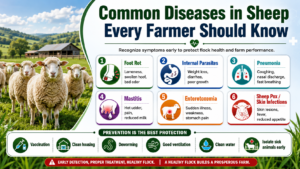
Healthy sheep normally spend much of their day eating, ruminating, resting and moving comfortably with the flock. When digestion begins to fail, however, the first warning signs can appear surprisingly quickly. Reduced appetite, diarrhea, abdominal swelling, weight loss, weakness and poor growth may all indicate Digestive Diseases in Sheep, and ignoring these changes can lead to serious production losses or even sudden deaths.

The digestive system of sheep is highly adapted to convert forage into energy through rumen fermentation. That same complex system also means that inappropriate diets, sudden ration changes, parasites, infectious organisms and poor management can disrupt normal digestion. Some digestive problems progress gradually, while conditions such as severe bloat or enterotoxemia may become life-threatening within a short period.
Understanding the common causes of Digestive Diseases in Sheep allows farmers to react earlier, protect vulnerable lambs and maintain better flock performance.
Early Signs of Digestive Diseases in Sheep That Farmers Should Never Ignore
The first indication of digestive trouble is often a change in normal behavior rather than a dramatic clinical sign. Sheep that separate from the flock, stop eating, spend less time ruminating or appear unusually dull should be examined closely. Farmers should also watch for changes in manure consistency, abdominal shape and body condition.
Diarrhea is one of the most recognizable signs of Digestive Diseases in Sheep, but it should never automatically be treated as a single disease. In lambs, diarrhea may be associated with organisms such as pathogenic Escherichia coli, rotavirus, coronavirus and Cryptosporidium. In older nursing or weaned animals, coccidiosis and gastrointestinal worms become important considerations. Merck Veterinary Manual notes that gastrointestinal helminth infections are among the most common causes of diarrhea in sheep raised on pasture.

A sheep with persistent diarrhea may quickly lose fluid, electrolytes and body condition. Young lambs are particularly vulnerable because dehydration and energy depletion can progress rapidly. The lamb shown in the accompanying image with soiled fleece around the hindquarters demonstrates one of the classic visual signs farmers should investigate rather than simply cleaning and ignoring.
Coccidiosis Can Quietly Damage Lamb Growth Before the Problem Looks Severe
Coccidiosis deserves particular attention when discussing Digestive Diseases in Sheep because exposure to Eimeria parasites is extremely common. Most exposed sheep do not develop obvious disease, but young lambs kept in heavily contaminated environments can experience significant intestinal damage.
Clinical coccidiosis occurs most frequently in lambs approximately four to eight weeks old. Common signs include sudden diarrhea, reduced appetite, dullness, abdominal discomfort, dehydration and noticeable loss of weight or condition. Crowding, contaminated pens, stressful transport, ration changes and heavily stocked grazing areas can increase disease pressure.
This means a farm may have a coccidiosis problem even when only part of the group appears visibly sick. Diagnosis should consider the age of the lambs, management history, clinical signs and fecal examination rather than relying only on diarrhea.
Keeping bedding dry, reducing fecal contamination of feeders and drinkers and avoiding excessive stocking density can help reduce exposure. When clinical disease is suspected, veterinary guidance is particularly important because treatment options and approvals for food-producing sheep vary between countries.
Enterotoxemia Can Turn High-Performance Feeding Into a Serious Emergency
Fast-growing lambs and sheep receiving highly fermentable diets require careful nutritional management. Enterotoxemia, sometimes called overeating disease or pulpy kidney disease, is associated particularly with Clostridium perfringens type D. The organism can multiply rapidly when intestinal conditions change, especially when animals consume large amounts of readily fermentable carbohydrate or suddenly gain access to rich feed.
Unlike some Digestive Diseases in Sheep that develop slowly, enterotoxemia may cause animals to be found dead with little warning. Neurological abnormalities, abdominal discomfort and sudden deterioration may occur in affected sheep. Because treatment is often difficult after advanced clinical signs develop, prevention is much more valuable than waiting for an outbreak.

Vaccination is therefore a major control tool. Merck notes that protection against type D enterotoxemia can involve appropriate vaccination programs for sheep and lambs. Gradual dietary changes are equally important. Moving hungry animals immediately onto high-energy concentrate diets or lush pasture creates unnecessary digestive risk.
Feed transitions should be planned rather than abrupt, giving rumen microorganisms time to adapt.
Bloat Is a Digestive Warning Sign That Can Become Life Threatening Fast
A visibly enlarged left side of the abdomen should never be ignored. Bloat occurs when gases generated by fermentation cannot escape normally from the rumen. The gas may become trapped within stable foam, known as frothy bloat, or accumulate as free gas.
Although bloat is especially recognized in cattle, it can also occur in sheep. Certain lush pastures and rapidly fermentable feeds may increase risk. Severe cases can interfere with breathing because the enlarged rumen places pressure on the diaphragm and other organs.
Farmers dealing with suspected bloat should not simply wait to see whether the animal improves. Severe abdominal enlargement, respiratory distress, repeated discomfort or rapid deterioration warrants urgent veterinary attention.
Prevention depends strongly on feeding and grazing management. Sudden access to large quantities of highly fermentable forage or concentrates should be avoided. Changes in pasture and concentrate feeding should be introduced progressively, especially in animals that have previously consumed a high-forage diet.
Gastrointestinal Parasites Can Reduce Performance Long Before Sheep Look Critically Sick
Not every digestive disorder causes dramatic diarrhea. Internal parasites can gradually reduce appetite, feed conversion, growth and body condition, creating an expensive hidden problem across the flock.
Pasture management is particularly important because sheep continually interact with environments contaminated by parasite eggs and larvae. Young animals and heavily stocked grazing systems may experience greater exposure. A flock that appears to be eating normally but fails to gain expected weight should therefore be assessed for parasitism rather than automatically receiving more concentrate feed.
Effective control of parasite-related Digestive Diseases in Sheep should be based on monitoring and veterinary planning instead of indiscriminate deworming. Repeated unnecessary treatment can contribute to anthelmintic resistance, making future parasite control increasingly difficult.
Fecal testing, body-condition assessment, pasture rotation strategies and targeted treatment can provide a more sustainable approach to parasite management.
Feeding Management Has a Bigger Impact on Sheep Digestion Than Many Farmers Realize
The image of sheep calmly eating good-quality forage represents one of the most important foundations of digestive health. Sheep are ruminants, so their digestive system depends on a stable microbial population inside the rumen. Major dietary changes can disrupt this balance.
Grain overload, inadequate fiber, spoiled feed, sudden ration changes or excessive rapidly fermentable carbohydrate can contribute to digestive disorders. Merck specifically warns that highly fermentable carbohydrate intake must be managed carefully because it can contribute to enterotoxemia and other nutritional problems.
Preventing Digestive Diseases in Sheep therefore begins long before medication is considered. Good-quality forage should form the basis of appropriate feeding programs, while concentrates need to be introduced gradually. Feed bunks should remain clean and protected from excessive moisture, mold and fecal contamination.
Clean drinking water is equally important. Reduced water intake can worsen dehydration in sheep experiencing diarrhea and may also reduce overall feed consumption.
Young Lambs Need Extra Protection Because Digestive Disease Can Progress Very Quickly
Newborn and young lambs deserve special attention because their immune and digestive systems are still developing. Merck reports that neonatal diarrhea can involve bacterial, viral and protozoal pathogens, while inadequate or delayed colostrum intake increases susceptibility to certain serious neonatal conditions.
Colostrum management is therefore one of the first defenses against Digestive Diseases in Sheep during early life. Lambing areas should also be kept clean and dry because intensive lambing environments can allow infectious organisms to accumulate.
Farmers should monitor whether lambs are actively nursing, maintaining body temperature and passing normal feces. Weakness, persistent vocalization, abdominal distension, watery diarrhea or reluctance to suck should trigger immediate investigation.
Waiting until a lamb is severely dehydrated makes recovery far more difficult.
Prevention Works Best When Nutrition Hygiene Biosecurity and Veterinary Monitoring Work Together
There is no single product or management trick capable of preventing every digestive disorder. Successful prevention comes from consistently controlling several risk factors at the same time.
Farmers should maintain clean feeding and watering areas, avoid overcrowding, introduce dietary changes progressively and monitor manure appearance and body condition. Young lambs require adequate colostrum, while vaccination programs should be planned with a veterinarian according to local disease risks.
Regular veterinary assessment is also valuable when flock performance changes unexpectedly. A veterinarian can help differentiate infectious diarrhea, coccidiosis, parasitism, nutritional disorders and other conditions that may produce similar external signs.
This distinction matters because treating the wrong cause wastes time and can allow the real problem to spread.
Daily Observation Is One of the Cheapest Tools for Controlling Digestive Diseases in Sheep
Farmers who know the normal behavior of their animals are often the first to recognize disease. A sheep that stops ruminating, isolates itself, develops diarrhea or shows abdominal enlargement is already providing valuable diagnostic information.
Record keeping makes those observations even more useful. Tracking feed changes, pasture movement, lamb age, mortality, diarrhea cases and treatment history can reveal patterns that are easy to miss when individual incidents are viewed separately.
Early recognition of Digestive Diseases in Sheep allows producers to isolate affected animals when appropriate, obtain diagnostic samples sooner, correct management problems and reduce the risk of wider flock losses.
The goal should not simply be to treat diarrhea or poor growth after it appears. Strong digestive management means creating conditions in which the rumen and intestinal tract remain stable, animals maintain consistent intake and potential disease problems are identified before they become expensive emergencies.